

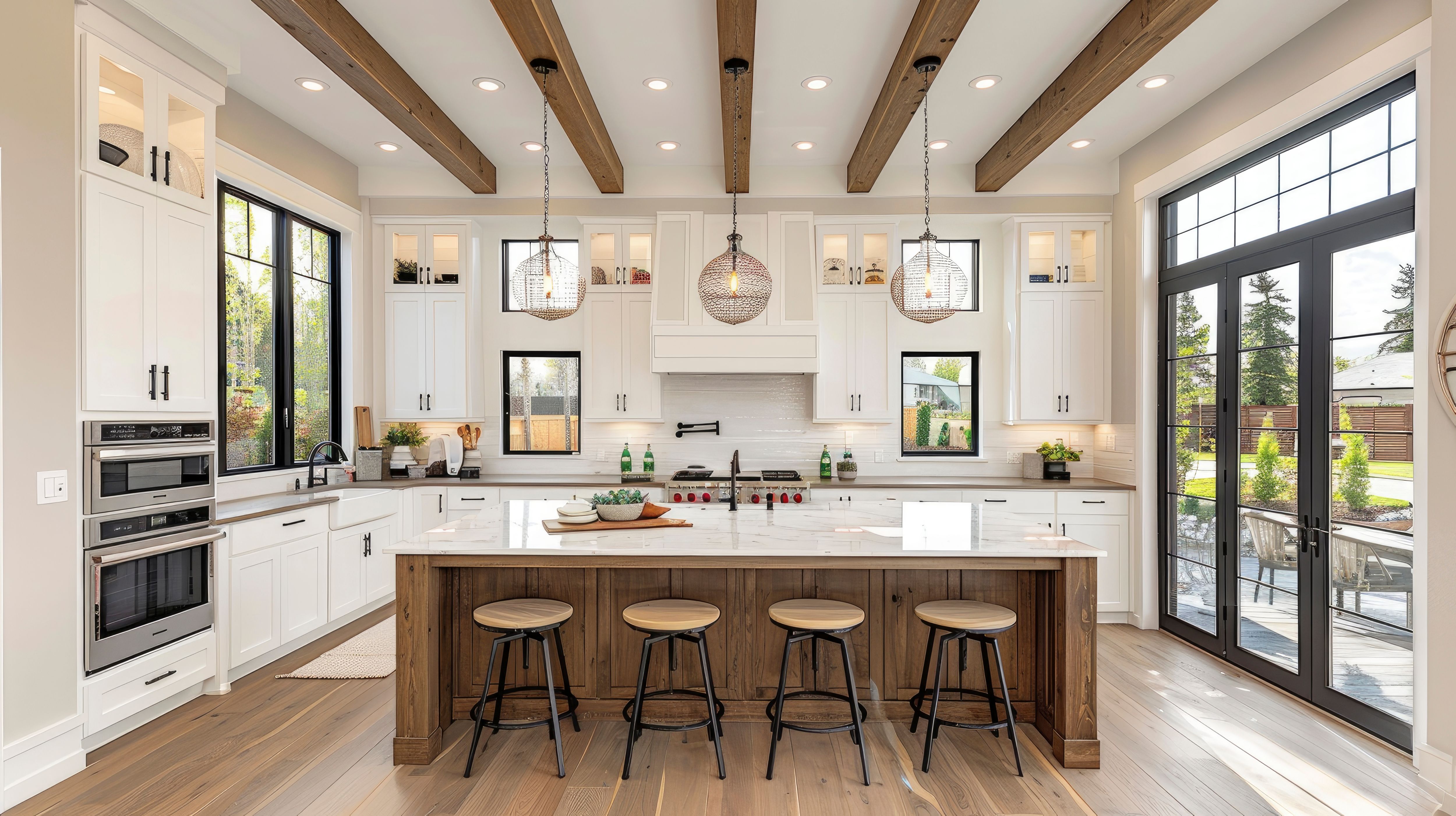
Summer completely changes the traffic patterns inside your home. Between kids tracking lake water through the side door, spilled ice drinks on the kitchen island, and muddy paws after a sudden Northeast Ohio thunderstorm, your entryways take a beating. For years, traditional laminate had a bad reputation for swelling and buckling at the first sign of moisture. If a glass of water sat on a seam overnight, the edges would curl by morning. Today, major structural changes in how these planks are engineered have rewritten that narrative entirely. Modern waterproof laminate easily survives heavy household spills, but understanding how this protection works at the board level is essential before you buy.
The Multi-Layer Engineering of Waterproof Laminate
To understand how laminate resists water, you have to look past the top aesthetic layer. Standard laminate relies on a high-density fiberboard (HDF) core made from compressed wood fibers. If raw wood fibers absorb liquid, they expand. This expansion forces the edges of the plank upward, a structural failure known as peaking.
Modern waterproof laminate stops this through a dense, multi-layer assembly:
The Wear Layer: A clear, rock-hard top coat infused with aluminum oxide shields the floor from deep scratches, scuffs, and direct liquid penetration.
The Print Layer: A high-definition photographic image that captures the exact grain, knots, and textures of premium hardwood or natural stone.
The Hydrophobic Core: The HDF core is infused with waterproof resins during the manufacturing process. This chemical treatment changes the behavior of the wood fibers, causing them to repel moisture rather than absorb it.
The Backing Layer: A balancing sheet that seals the underside of the plank against subfloor moisture vapor rising from below.
The Secret Weapon: Moisture-Sealed Plank Joints
The flat surface of a laminate plank is naturally waterproof because of its top wear coat. The true vulnerability has always been the seams where two separate boards click together. When wet feet run inside from the backyard pool, water pools in these tiny valleys and slowly seeps down into the core.
Waterproof laminate eliminates this weak point with tight, mechanical locking joints. Instead of relying on glue or plastic strips, the planks are milled with precise tongue-and-groove profiles that snap together under intense tension.
Manufacturers then apply a specialized hydrophobic coating directly to these milled edges. When the planks click together, this wax or silicone barrier is compressed, creating a completely watertight seal. Liquid cannot pass through the joint. It stays trapped on the surface where it can sit safely for hours until you wipe it away.
Kitchen Durability vs. Pool-Tracking Protection
Moisture challenges vary wildly depending on the room. Your kitchen deals with localized, high-volume accidents. A leaking dishwasher hose, a dropped pot of pasta water, or a tipped dog bowl can send a sudden rush of liquid across the room. Because waterproof laminate joints lock water on top of the floor, these major spills won't seep through to destroy your subfloor, giving you a wide window of time to clean up the mess.
Backyard pool tracking is a different beast. It is a repetitive, low-volume moisture issue. Wet footprints leave a continuous trail of chlorinated water that dries slowly over the course of an afternoon. On an old-school laminate floor, this constant wet-and-dry cycle slowly softens the edges of the planks. Waterproof laminate handles this traffic without flinching because the edges are completely sealed against the cycle of absorption and evaporation.
Simple Maintenance for Wet Seasons
Even though modern laminate is genuinely waterproof, it is not an outdoor material or a replacement for pool-grade porcelain tile. Leaving standing puddles on the floor for days on end will eventually test the limits of any perimeter seal.
Keep a simple microfiber mop near your busiest exterior doors to catch heavy pool water before it spreads into hallways. When it comes to cleaning, skip the steam mops entirely. The intense heat and forced moisture from a steam cleaner can drive vapor past the locking joints and ruin the adhesive bond underneath. A damp mop and a simple, pH-neutral cleaner are all it takes to remove muddy footprints and keep the wear layer pristine.
Floors Engineered for Real Cleveland Summers
A beautiful floor should fit the way your family actually lives, not force you to constantly police your kids and pets. Modern waterproof laminate bridges that gap, delivering the look of luxury hardwood without the anxiety of water damage. Over the last forty years, our team at The Carpet Company has guided homeowners through the technical side of flooring prep, helping families across Geauga and Cuyahoga counties choose materials that stand up to local humidity and active households. We focus on flawless joint locking and proper underlayment so your floors stay completely flat through every season. Contact us today to schedule your installation or to discuss the details of your upcoming flooring project.


