

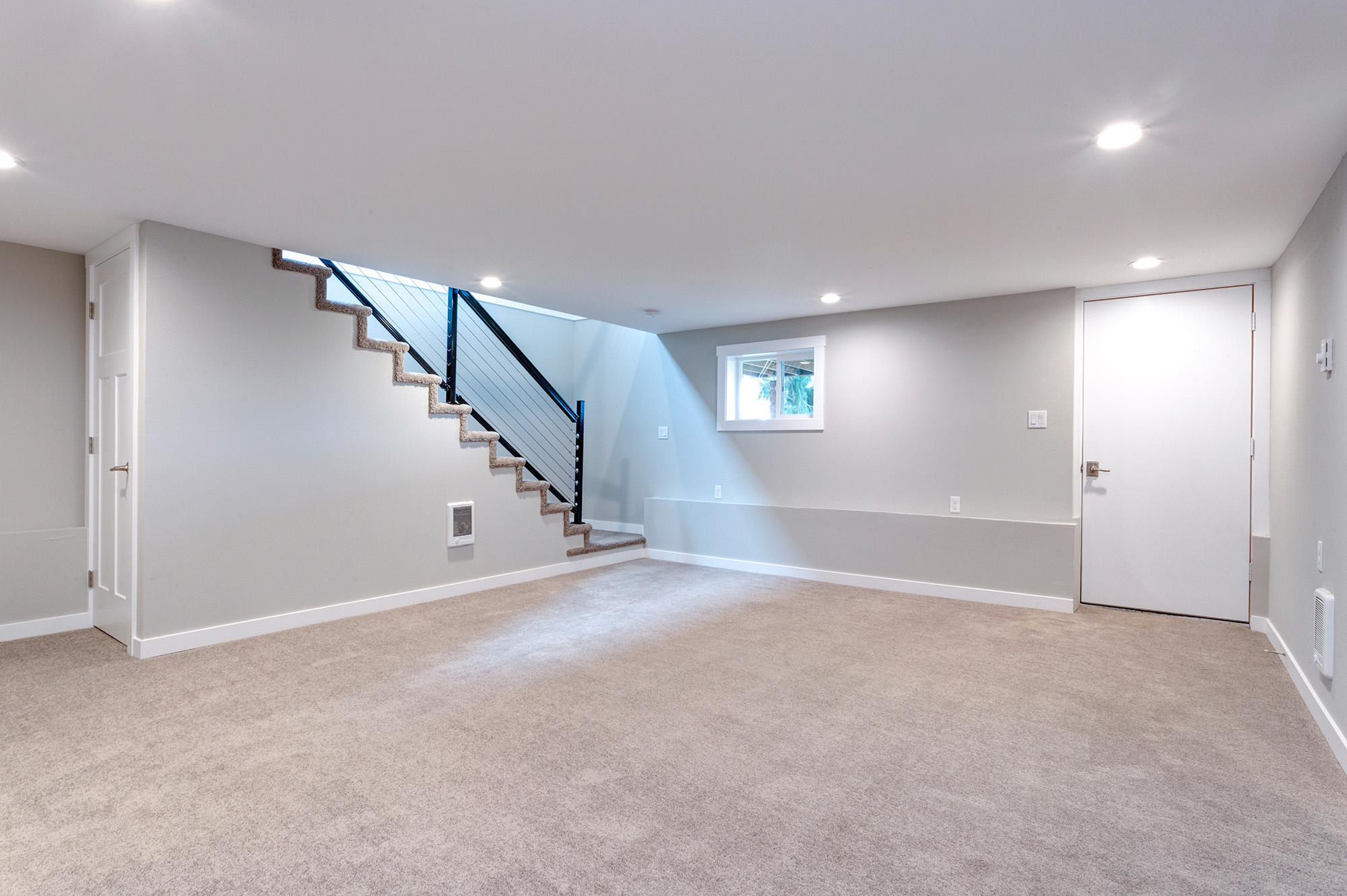
Northeast Ohio summers bring a distinct, heavy shift in weather. As warm, moisture-laden air rolls off Lake Erie, indoor humidity levels across Greater Cleveland consistently climb into the muggy high percentages of July and August. While you feel that sticky heat on your back porch in Chesterland or Chagrin Falls, your basement feels it in a completely different way. Below-grade concrete acts like a massive sponge for seasonal moisture. If you are planning to install new basement carpet, understanding how this regional climate affects your concrete foundation is the single most important factor in preventing premature flooring failure.
The Science of Below-Grade Concrete Dampness
Basement concrete looks completely solid, but it is actually a highly porous, stone matrix. It is filled with microscopic pathways that allow water vapor to migrate upward from the earth. In our region, historic homes in Shaker Heights or Cleveland Heights often sit on older foundations that lack modern exterior vapor barriers or plastic underlayments.
When summer humidity peaks outside, two distinct moisture problems happen simultaneously inside your basement layout:
Hydrostatic Pressure: Heavy seasonal rainfall saturates the clay-heavy soils common to Northeast Ohio. This trapped water pushes against your foundation walls and forces liquid moisture up through the microscopic pores of your concrete floor.
Condensation: Warm, humid air enters your basement through windows, doors, or utility vents. When that warm air hits a cool concrete floor, it instantly reaches its dew point and turns into liquid droplets on the surface.
Laying a pad and carpet directly over a damp floor traps this moisture. Without an escape route, the water vapor collects beneath the backing of your carpet, breaking down adhesives and creating a perfect environment for structural issues.
Why Damp Subfloors Cause Carpet Bubbling and Wrinkling
When moisture gets trapped beneath a below-grade carpet installation, the damage goes far beyond a musty smell. The structural integrity of the carpet itself begins to degrade through a process called delamination.
Carpet is manufactured using a primary backing where the fibers are tufted, and a secondary backing that gives the carpet its structural stiffness. These two layers are held together by a latex adhesive. Constant exposure to high subfloor moisture and summer humidity breaks down that latex bond. As the adhesive softens, the primary and secondary backings separate from one another.
Once this separation happens, the carpet loses its tension. The force from everyday foot traffic causes the relaxed fabric to shift, leading to prominent ripples, unsightly bubbles, and deep wrinkles across your floor. This isn't a defect in the carpet fibers; it is a direct consequence of an unmanaged, damp concrete subfloor.
The Critical Step: Below-Grade Moisture Testing
You cannot determine if a concrete floor is dry enough for carpet simply by looking at it or touching it. Deeply trapped moisture can take days to rise to the surface. Before any carpet rolls leave our warehouse, a professional assessment of your concrete slab is an absolute necessity.
Our team utilizes specialized moisture meters to check the internal conditions of your floor. We look at relative humidity levels within the concrete itself, ensuring the slab falls well within safe parameters before installation begins. If a subfloor shows high moisture levels during a humid July stretch, we do not ignore the data or push through the job. We address the root issue by recommending a dedicated concrete vapor barrier or a specialized primer coat to seal the pores of the slab, locking the moisture deep underground where it cannot harm your new flooring.
Choosing the Right Materials for Below-Grade Spaces
In a finished Cleveland-area basement, your material choices must account for seasonal atmospheric changes. This is where high-quality standard materials make a massive difference.
We refuse to cut corners on the invisible elements of your installation, specifically emphasizing the use of premium, breathable carpet padding designed to resist mold and mildew growth. Synthetic carpet fibers, such as solution-dyed nylon or polyester, are highly recommended for basements because they do not absorb moisture into their core structures like natural wool fibers do. Paired with a high-grade synthetic backing, these materials allow minimal amounts of residual ambient vapor to pass through and evaporate naturally into the room air, where a standard home dehumidifier can easily collect it.
Long-Term Moisture Maintenance
An expert installation handles the subfloor, but maintaining the environment keeps your carpet looking pristine for decades. Running a properly sized dehumidifier from May through September is essential for any Northeast Ohio basement. Aim to keep your indoor relative humidity below 50 percent to prevent condensation from forming on your floors. Ensure your outdoor gutters are clean and your downspouts extend at least six feet away from your foundation walls to keep heavy summer rainwater from pooling against your basement stone.
Protecting Your Basement Flooring
Laying carpet in a walkout basement in Beachwood requires a completely different approach than tackling a century-old home foundation in Cleveland Heights. Our team has spent over forty years analyzing concrete subfloors across Geauga and Cuyahoga counties, experiencing firsthand how heavy clay soils and lake-effect humidity impact residential renovations. We know that shortcuts on concrete prep always surface later as wrinkled, ruined carpet. By focusing on detailed, local diagnostics before a single roll of padding is delivered, we ensure your basement transformation remains beautiful, comfortable, and dry for decades to come. Contact us today to schedule a moisture test and subfloor evaluation before your installation begins.


