

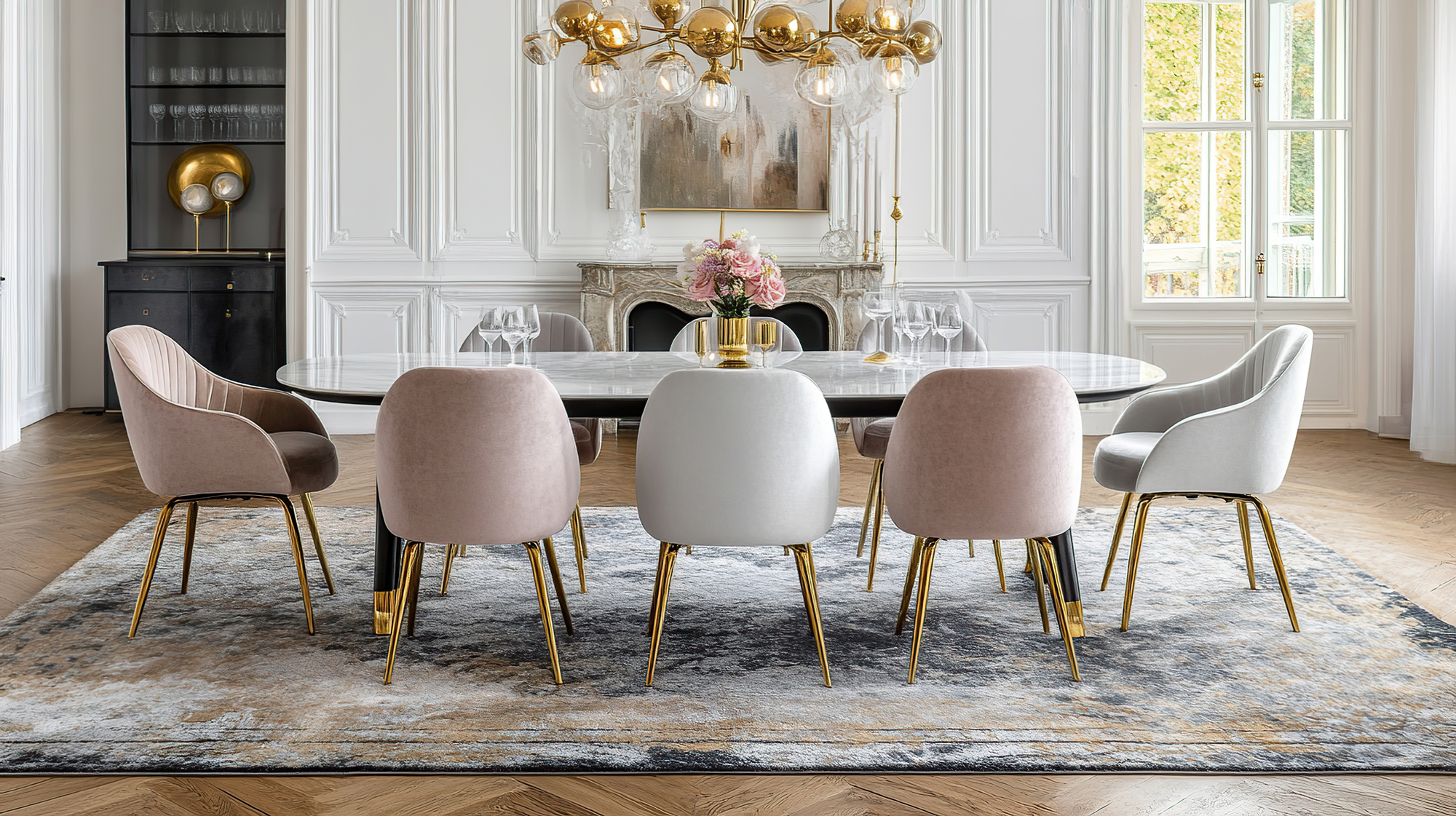
Formal dining rooms in Chagrin Falls, Gates Mills, and Shaker Heights serve as the centerpiece for family gatherings and holiday entertaining. Historic Western Reserve homes and classic center-hall Colonials often showcase gorgeous quarter-sawn oak floors, custom wainscoting, and large heirloom tables. Adding a plush area rug introduces warmth, color, and acoustic balance to these stately rooms.
Buying the wrong size rug creates an irritating functional problem. When dinner guests pull their chairs back to sit down, the back legs or casters catch on the edge of the fabric. You end up with wobbly chairs, wrinkled rug edges, and scratched hardwood floors. Sizing your dining room rug correctly keeps every chair leg stable while highlighting the original architectural beauty of your home.
The Golden Rule: The 24-to-30-Inch Perimeter Extension
The single biggest mistake you can make when shopping for a rug is measuring only the perimeter of the tabletop. An eight-by-ten-foot rug might look proportional while your chairs sit neatly tucked away, but the layout fails the moment someone sits down to eat.
To keep chairs completely flat during dinner, your area rug needs to extend at least 24 to 30 inches beyond the edge of the table on all sides. This generous perimeter margin gives your guests ample room to push back their chairs, stand up, and sit down without the rear legs dropping over the bound edge.
An average dining chair depth ranges between 20 and 24 inches.
Extending the rug perimeter by a minimum of 24 inches guarantees the chair stays level during an entire meal.
Extra wide host chairs or heavy caster armchairs benefit from a full 30-inch perimeter extension.
Accounting for Table Leaves and Holiday Gatherings
Many East Side dining rooms feature extendable tables built for entertaining. If you regularly insert extra leaves for Thanksgiving dinners or large family celebrations, you need to size your rug for the extended table, not its everyday compact state.
Measure your table with all leaves fully installed before choosing your rug dimensions. A rug sized only for a six-seat setup leaves end chairs completely off the fabric once you expand the table to seat ten or twelve guests.
If your dining room features a wide, rectangular table, look for matching proportional rug shapes rather than standard square cuts. Keeping the rug shape consistent with the table geometry maintains visual symmetry across the room and ensures balanced walk space along every side.
Balancing Rug Scale with Historic Hardwood Borders
In classic homes across Cuyahoga and Geauga Counties, you want to showcase the original oak or maple hardwood framing the space. A rug that is too large swallows the entire room and hides beautiful wood grain, but a rug that is too small looks like a floating postage stamp.
Aim to leave an even border of exposed hardwood between the edge of your rug and the baseboards.
Ideal perimeter margins range from 12 to 18 inches of visible wood flooring around the edges of the room.
In smaller, historic dining nooks, an eight-inch exposed border keeps the layout proportionate.
Always measure around permanent architectural features, like built-in corner hutches, radiator covers, and fireplace hearths, to make sure the rug lies completely flat without bunching against millwork.
Choosing Low-Profile Piles for Effortless Chair Movement
Beyond overall dimensions, the construction and pile density of your carpet determine how smoothly dining chairs slide back and forth. Deep, shaggy textures trap chair legs and create resistance every time a guest shifts their seat.
Dense, low-profile cut piles or flat-woven wool styles provide the ideal foundation for dining spaces. These tighter weaves allow chair legs to glide without snagging, while resisting the crushing weight of heavy table legs over time.
Pairing a low-profile rug with an ultra-thin, dense felt-and-rubber pad also adds essential stability. The rubber base prevents the rug from shifting out of alignment as chairs slide back, while the firm felt core eliminates any spongy bounce that could cause drink spills.
Custom Rug Solutions for Irregular Dining Rooms
Standard mass-market rug dimensions rarely match the distinct footprints of historic East Side architecture. If standard retail sizes force you to choose between covering a floor vent or dealing with catching chair legs, a custom-cut broadloom rug provides the perfect answer.
Our in-house fabrication team cuts and binds high-end wool and patterned carpets to your exact room specifications. You get the precise length and width your dining layout needs, ensuring every chair glides smoothly across a flat, stable surface without sacrificing the visual balance of your space.
Find the Perfect Dining Room Rug at Our Chesterland Showroom
A thoughtfully sized dining room rug brings luxury, warmth, and effortless function to your home's entertaining spaces. Selecting the right scale and edge finish protects your original hardwood floors while providing a comfortable, trip-free experience for your guests.
Our family-owned team has helped homeowners throughout Greater Cleveland design and install premium flooring for over 40 years. Visit our showroom in Chesterland on the East Side to explore our collection of luxury broadloom carpets, view custom binding finishes, and get expert sizing guidance from dedicated professionals. You can also contact us today to plan your custom area rug project.


